Ditapis dengan

Geoscience language models and their intrinsic evaluation
Geoscientists use observations and descriptions of the rock record to study the origins and history of our planet, which has resulted in a vast volume of scientific literature. Recent progress in natural language processing (NLP) has the potential to parse through and extract knowledge from unstructured text, but there has, so far, been only limited work on the concepts and vocabularies that ar…
- Edisi
- Vol.14, June 2022
- ISBN/ISSN
- -
- Deskripsi Fisik
- 10 hlm PDF, 1.163 KB
- Judul Seri
- Applied Computing and Geoscience - Open Access
- No. Panggil
- 551.136
Great SCO2T! Rapid tool for carbon sequestration science, engineering, and ec…
CO2 capture and storage (CCS) technology is likely to be widely deployed in the coming decades in response to major climate and economics drivers: CCS is part of every clean energy pathway that limits global warming to 2 °C or less and receives significant CO2 tax credits in the United States. These drivers are likely to stimulate the capture, transport, and storage of hundreds of millions …
- Edisi
- Vol.7, September 2020
- ISBN/ISSN
- 2590-1974
- Deskripsi Fisik
- 11 hlm PDF, 3.757 KB
- Judul Seri
- Applied Computing and Geoscience - Open Access
- No. Panggil
- 551.136

Performance analysis of ultra-wideband positioning for measuring tree positio…
Accurate individual tree locations enable efficient forest inventory management and automation, support precise forest surveys, management decisions and future individual-tree harvesting plans. In this paper, we compared and analyzed in detail the performance of an ultra-wideband (UWB) data-driven method for mapping individual tree locations in boreal forest sample plots of varying complexity. …
- Edisi
- 12 hlm PDF, 19.902 KB
- ISBN/ISSN
- 1872-8235
- Deskripsi Fisik
- 12 hlm PDF, 19.902 KB
- Judul Seri
- ISPRS Open Journal of Photogrammetry and Remote Sensing
- No. Panggil
- 621.3678
Minimal rotations in arbitrary dimensions with applications to hypothesis tes…
The rotation of a vector around the origin and in a plane constitutes a minimal rotation. Such a rotation is of vital importance in many applications. Examples are the re-orientation of spacecraft or antennas with minimal effort, the smooth interpolation between sensor poses, and the drawing of circular arcs in 2D and 3D. In numerical linear algebra, minimal rotations in different planes are us…
- Edisi
- Vol.15, January 2025
- ISBN/ISSN
- 1872-8235
- Deskripsi Fisik
- 12 hlm PDF, 1.279 KB
- Judul Seri
- ISPRS Open Journal of Photogrammetry and Remote Sensing
- No. Panggil
- 621.3678
Automatic labelling for semantic segmentation of VHR satellite images: Applic…
The application of deep learning methods to remote sensing data has produced good results in recent studies. A promising application area is automatic land cover classification (semantic segmentation) from very high-resolution satellite imagery. However, the deep learning methods require large, labelled training datasets that are suitable for the study area. Map data can be used as training dat…
- Edisi
- Vol.9, August 2023
- ISBN/ISSN
- 1872-8235
- Deskripsi Fisik
- 11 hlm PDF, 15.060 KB
- Judul Seri
- ISPRS Open Journal of Photogrammetry and Remote Sensing
- No. Panggil
- 621.3678
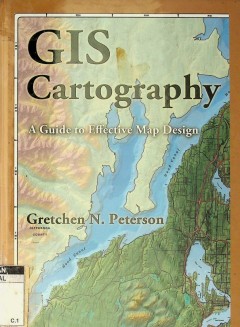
Gis cartography a guide to efective map desigen
- Edisi
- -
- ISBN/ISSN
- 978-1-4200-8213-5
- Deskripsi Fisik
- viii, 227 hlm.
- Judul Seri
- -
- No. Panggil
- 526.029 GRE g
- Edisi
- -
- ISBN/ISSN
- 978-1-4200-8213-5
- Deskripsi Fisik
- viii, 227 hlm.
- Judul Seri
- -
- No. Panggil
- 526.029 GRE g
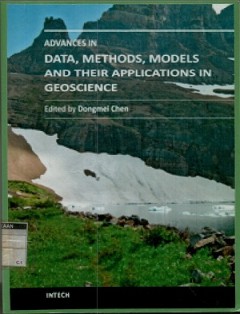
Advances in data, methods, models and their applications in geoscience
- Edisi
- -
- ISBN/ISSN
- 978-953-307-737-6
- Deskripsi Fisik
- vi, 336 hlm. : illus.
- Judul Seri
- -
- No. Panggil
- 550 Don A
- Edisi
- -
- ISBN/ISSN
- 978-953-307-737-6
- Deskripsi Fisik
- vi, 336 hlm. : illus.
- Judul Seri
- -
- No. Panggil
- 550 Don A
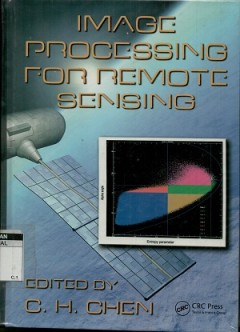
Image processing for remote sensing
- Edisi
- -
- ISBN/ISSN
- -
- Deskripsi Fisik
- 380 hlm. illus.
- Judul Seri
- -
- No. Panggil
- 621.3678 Che I
- Edisi
- -
- ISBN/ISSN
- -
- Deskripsi Fisik
- 380 hlm. illus.
- Judul Seri
- -
- No. Panggil
- 621.3678 Che I

The Starting on remote sensing and geo information system in China
- Edisi
- -
- ISBN/ISSN
- 7-5046-1106-9/K-16
- Deskripsi Fisik
- vi, 315 hlm. : illus.
- Judul Seri
- -
- No. Panggil
- 621.3678 CHE t
- Edisi
- -
- ISBN/ISSN
- 7-5046-1106-9/K-16
- Deskripsi Fisik
- vi, 315 hlm. : illus.
- Judul Seri
- -
- No. Panggil
- 621.3678 CHE t
Key concepts and techniques in GIS
- Edisi
- -
- ISBN/ISSN
- 978-1-5129-1015-6
- Deskripsi Fisik
- x, 103 hlm. illus.
- Judul Seri
- -
- No. Panggil
- 910.285 JOC k
- Edisi
- -
- ISBN/ISSN
- 978-1-5129-1015-6
- Deskripsi Fisik
- x, 103 hlm. illus.
- Judul Seri
- -
- No. Panggil
- 910.285 JOC k
 Batas Wilayah
 Ekologi
 Fotogrametri
 Geografi
 Geologi
 GIS
 Ilmu Tanah
 Kartografi
 Manajemen Bencana
 Oceanografi
 Penginderaan Jauh
 Peta