Ditapis dengan

Web designer must have book: cara cepat membuat desain template website tanpa…
- Edisi
- -
- ISBN/ISSN
- -
- Deskripsi Fisik
- vi, 189 hlm. : illus.
- Judul Seri
- -
- No. Panggil
- 006.7 SU w
- Edisi
- -
- ISBN/ISSN
- -
- Deskripsi Fisik
- vi, 189 hlm. : illus.
- Judul Seri
- -
- No. Panggil
- 006.7 SU w

Menikmati multimedia pada windows xp
- Edisi
- -
- ISBN/ISSN
- -
- Deskripsi Fisik
- 201 hal.:ill.;18 cm
- Judul Seri
- -
- No. Panggil
- 006.7 ZAN m
- Edisi
- -
- ISBN/ISSN
- -
- Deskripsi Fisik
- 201 hal.:ill.;18 cm
- Judul Seri
- -
- No. Panggil
- 006.7 ZAN m

Penelitian ilmiah dan martabat manusia
Secara khusus buku ini lahir dari kegelisahansaya terhadap situasi penelitian dan perkembangan ilmu pengetahuan di Indonesia. Banyak penelitian dilakukan dengan metode yang serampangan. Banyak juga peneliti dan ilmuwan hanya memahami metode penelitian sebagai teknik dan kemudian "buta" terhadap pengandaian-pengandaian konseptualyang tertanam di dalam maupun di balik metode tersebut.Jika metode…
- Edisi
- -
- ISBN/ISSN
- 978-602-9097-15-3
- Deskripsi Fisik
- 101 hlm.
- Judul Seri
- -
- No. Panggil
- 001.42 REZ p
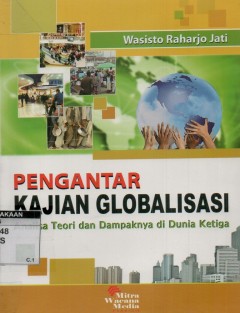
Pengantar kajian globalisasi : analisa teori dan dampaknya di dunia ketiga
Premis utama yang disajikan dalam buku ini adalah analisa perkembangan kajian globalisasi dan praktik riilnya dalam konstelasi internasional. Perbincangan mengenai globalisasi dalam kajian internasional sendiri masih didominasi adanya nalar pikir konstruktivis bahwa globalisasi akan membawa pada kemakmuran dunia. Pada realitanya, globalisasi sendiri adalah arena perpanjangan kepentingan nasiona…
- Edisi
- -
- ISBN/ISSN
- 978-602-1521-49-6
- Deskripsi Fisik
- viii, 158 hlm. : illus.
- Judul Seri
- -
- No. Panggil
- 303.48 WAS p

Mengutamakan manusia di dalam pembangunan
- Edisi
- -
- ISBN/ISSN
- -
- Deskripsi Fisik
- xvi, 548 hlm. 23 cm.
- Judul Seri
- -
- No. Panggil
- 303.44 MIC m
- Edisi
- -
- ISBN/ISSN
- -
- Deskripsi Fisik
- xvi, 548 hlm. 23 cm.
- Judul Seri
- -
- No. Panggil
- 303.44 MIC m

Penyelesaian sengketa lingkungan hidup di Indonesia
- Edisi
- -
- ISBN/ISSN
- 978-979-098-058-7
- Deskripsi Fisik
- x, 299 hlm.
- Judul Seri
- -
- No. Panggil
- 304.2 GAT p
- Edisi
- -
- ISBN/ISSN
- 978-979-098-058-7
- Deskripsi Fisik
- x, 299 hlm.
- Judul Seri
- -
- No. Panggil
- 304.2 GAT p
Programming orcobjeets with VBA : a task-oriented approach
This book provided the answer, demonstrating how to work through the massive ArcObjects collection by examining only the objects, properties, and methods needed to perform specific taks/ Now with this new edition, the aothor moves to the next level, adding macros and explanitions for the new Geoprocessing object introduced in ArcGIS 9.x. Instead of treating this new feature in separate chapters…
- Edisi
- -
- ISBN/ISSN
- 978-1-58488-580-1
- Deskripsi Fisik
- xv, 342 hlm. illus.
- Judul Seri
- -
- No. Panggil
- 005.1 KAN p
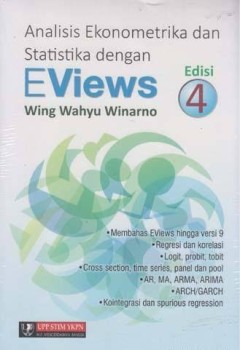
Analisis Ekonometrika dan Statistika dengan EViews
EViews adalah program komputer yang digunakan untuk mengolah data statistika dan ekonometrika, baik bersifat cross section, time series, data panel, maupun pooled data. Program EViews sangat dikenal oleh para peneliti karena kemudahan pemakaian dan kesederhanaan dalam tampilan hasil analisisnya (yang kebanyakan hanya satu layar saja).
- Edisi
- Ed. 4, Cet. 1
- ISBN/ISSN
- 9786021286180
- Deskripsi Fisik
- x, 360 hlm, ilus, 23 cm
- Judul Seri
- -
- No. Panggil
- 005.262 WIN a

Fun coding with Micropython cara cepat Belajar Micropython untuk Microcontrol…
- Edisi
- -
- ISBN/ISSN
- -
- Deskripsi Fisik
- x, 230 p .: ilus.: 21 cm
- Judul Seri
- -
- No. Panggil
- 005.13 AND f
- Edisi
- -
- ISBN/ISSN
- -
- Deskripsi Fisik
- x, 230 p .: ilus.: 21 cm
- Judul Seri
- -
- No. Panggil
- 005.13 AND f

Fuzzy multi attribute decision making (Fuzzy MADM)
Buku ini tersusun atas 6 bab,yaitu:rnBab 1,membahas tentang teori himpunan fuzzy.Pada bagian ini akan di jelaskan konsep dasar himpunan fuzzy,perbedaan antara himpunan crisp dan himpunan fuzzy,fungsi keanggotaan,operator-operator fuzzy,dan bilangan fuzzy.rnBab 2,embahas tentang relasi prefensi fuzzy.Relasi preferensi fuzzy ini nantinya akan memegang peranan penting bagi proses pengambilan keput…
- Edisi
- -
- ISBN/ISSN
- -
- Deskripsi Fisik
- xiv, 366 hlm. illus.
- Judul Seri
- -
- No. Panggil
- 005.1 SRI f
 Batas Wilayah
  Ekologi
  Fotogrametri
  Geografi
  Geologi
  GIS
GIS  Ilmu Tanah
  Kartografi
  Manajemen Bencana
  Oceanografi
  Penginderaan Jauh
  Peta
Peta