Ditapis dengan
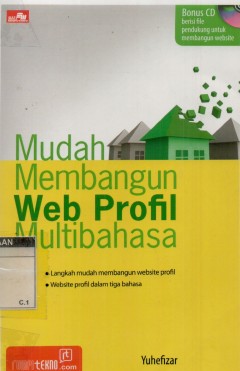
Mudah Membangun Web Profil Multibahasa
Buku ini membahas tentang langkah membangun website profil multibahasa secara mudah dan tanpa perlu memiliki kemampuan web programming sama sekali.mudah dari tahap persiapan hingga online di internet.Setip langkahnya disertai gambar pendukung untuk memudahkan para pembaca dalam mempraktikkan dan memahaminya.
- Edisi
- -
- ISBN/ISSN
- 978-602-02-0466-6
- Deskripsi Fisik
- xiv, 203 hlm. : illus., 23 cm.
- Judul Seri
- -
- No. Panggil
- 005.262 YUH m

Teori dan aplikasi pengolahan citra
Buku sangat cocok dipakai oleh Mahasiswa Teknologi Informasi, Teknik Informatika, Telnik Elektro, dan Jurusan Teknik lain yang sedang atau hendak mempelajari pengolahan citra. Semua contoh mudah dipraktekan Octave ataupun MATLAB Algoritma dan kode yang disajikan tidak menutup kemungkinan untuk dikonversikan ke dalam bahasa pemrograman lain. Buku ini terdiri dari bagian-bagian : - Pengantar peng…
- Edisi
- -
- ISBN/ISSN
- 978-979-29-3430-3
- Deskripsi Fisik
- xvi, 640 hlm.
- Judul Seri
- -
- No. Panggil
- 005.11 ABD t
Analisis SEM Menggunakan AMOS
AMOS adalah program aplikasi (SEM) yang user friendly sekaligus powerful, sehingga AMOS saat ini adalah program terpopuler di Indonesia untuk mengolah berbagai model riset yang menggunakan metode SEM. Yang membahas berbagai konsep dasar SEM serta cara penggunaan program AMOS dalam membuat dan mengolah sebuah model SEM. Untuk memudahkan pemahaman, pada setiap topik disertakan contoh kasus yang …
- Edisi
- -
- ISBN/ISSN
- 978-602-003172-9
- Deskripsi Fisik
- ix, 222 hlm.
- Judul Seri
- -
- No. Panggil
- 005.3 SIN a
Struktur data menggunakan Java
Buku ini membahas tentang membuat struktur tumpul,Kemudian antrian dan tantang link list,baik single maupun double.mengenai kelas Collection yang merupakan kelas yang dimiliki oleh java,dan diberikan dengan contoh-contoh program yang mengimplementasikan kelas Collection.Penjelasan disajikan dengan menggunakan ilustrasi yang akan membantu ilustrasi yang akan mmembantu memberikan gambaran mengena…
- Edisi
- -
- ISBN/ISSN
- 978-979-756-672-2
- Deskripsi Fisik
- x, 218 hlm. : illus., 23 cm.
- Judul Seri
- -
- No. Panggil
- 005.262 HER s

HTML, XHTML, and CSS
The first step to any Web document is to build a strong foundatin. This comprehensive book focuses on the essential building blocks of the Web: HyperText Markup Language (HTML), extensiable HTML (XHTML),and Cascading Style Sheets (CSS). You'll learn basic scripting and coding strandards; how to use tags, tables,forms,and links; the beast ways to test and validate pages; and many more techniques…
- Edisi
- kelima
- ISBN/ISSN
- 978-0-470-52396-4
- Deskripsi Fisik
- xlvi, 745 hlm. : illus.
- Judul Seri
- -
- No. Panggil
- 005.13 STE h
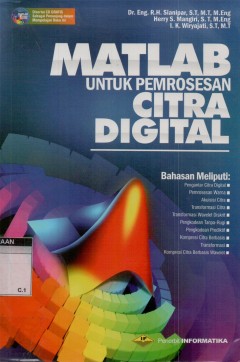
MATLAB untuk pemrosesan citra digital
Buku ini menjelaskan tentangpemrosesan citra menggunakan perangkat lunak yang modern buku ini juga diorganisasikan secara sistematik sehingga dapat mengoptimalkan pemahaman pembaca.
- Edisi
- -
- ISBN/ISSN
- 978-602-1514-11-5
- Deskripsi Fisik
- vi, 362 hlm. : illus.
- Judul Seri
- -
- No. Panggil
- 005.13 SIA m

Evaluasi pengontrolan sistem informasi
Sistem informasi beserta informasi di dalamnya adalah aset paling besar dan penting yang patut dilindungi, diawasi, dan dikontrol. Oleh karna itu, sangatlah berguna apabila keamanan sistem beserta sistem pengontrolnya setiap berapa tahun (lebih sering lebih baik) dievaluasi dan diperbaiki atau ditingkatkan di mana perlu. Buku ini lebih memfokuskan pada kemungkinan-kemungkinan ancaman terhadap s…
- Edisi
- Ed.1, Cet. 1
- ISBN/ISSN
- 978-979-756-846-7
- Deskripsi Fisik
- xvi, 220 hlm., 23cm., ilus.
- Judul Seri
- -
- No. Panggil
- 005.3 IRW e
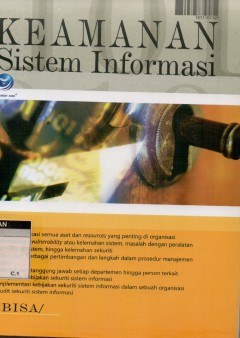
Keamanan Sistem Informasi
Dalam buku ini juga diberikan masukan atau gambaran apa saja yang harus diperhatikan apabila bermaksud untuk membuat atau mereview kebijakan sekuriti sistem informasi.rnAdapun langkah-langkah yang dapat dipertimbangkan pada saat penyusunan kebijakan sekuriti sistem informasi yang dibahas dalam buku ini, meliputi:rn• Mengidentifikasi semua aset dan resources yang penting di organisasi. Tujuan …
- Edisi
- Ed. 1
- ISBN/ISSN
- 978-979-29-1792-5
- Deskripsi Fisik
- xii, 180 hlm. : illus., 23 cm.
- Judul Seri
- -
- No. Panggil
- 005.3 IBI k

Java programming for spatial sciences
The book introduces object-oriented modelling,including key concepts such as abstraction,inheritance and encapsulation. It shows how these ideas can be used to model,process and visualise geografic information, leading the reader from initial ideas of class design through to the implementation of feature-rich raster and vector models of spsce. It includes some of the morerecent development in i…
- Edisi
- -
- ISBN/ISSN
- 0415260973
- Deskripsi Fisik
- xii, 320 hlm. : illus.
- Judul Seri
- -
- No. Panggil
- 005.13 WOO j

Java 5.0 program design: an introduction to programming and object
This book is targeted for a first programming couse, and it is has been designed to be appropriate for people from all disciplines. We assume no priorprogrammin skills and use mathematics and science at a level appropriate to first-year college students.rn The primary goals of the text are torn-Introduce students to the java programming language;rn-Present and encourage the use of the object-o…
- Edisi
- -
- ISBN/ISSN
- 978-007-131281-3
- Deskripsi Fisik
- xxiv, 919 hlm. : illus.
- Judul Seri
- -
- No. Panggil
- 005.13 JAM j
 Batas Wilayah
  Ekologi
  Fotogrametri
  Geografi
  Geologi
  GIS
GIS  Ilmu Tanah
  Kartografi
  Manajemen Bencana
  Oceanografi
  Penginderaan Jauh
  Peta
Peta