Ditapis dengan

Pemetaan neraca dan valuasi ekonomi sumberdaya ikan Kota Batam, Provinsi Kepu…
Tujuan dari kegiatan ini adalah melaksanakan kajian neraca spasial sumberdaya ikan berbasis ekosistem di wilayah pesisir dan laut Kota Batam, sehingga melalui kajian neraca ini dapat diketahui cadangan pemanfaatan, neraca potensi ikan maupun nilai ekonominya sebagai input untuk kebijakan perikanan tangkap yang lebih lestari. Sedangkan sasarannya adalah tersusunnya neraca dan valuasi ekonomi sum…
- Edisi
- -
- ISBN/ISSN
- 978-979-1266-20-8
- Deskripsi Fisik
- xiii, 76 hlm. : illus.
- Judul Seri
- -
- No. Panggil
- Buku.Karya 2007/06 BAD p

Model permukaan dijital: pengolahan data DTM dan DEM dengan perangkat lunak, …
Global Mapper, surfer dan quickGrid adalah bagian dari Model Permukaan Dijital. Ketiga perangkat lunak ini memiliki kemampuan-kemampuan (features) daar Umum yang wajib dimiliki oleh setiap sistem yang sejenis) di dalam menglola data DTM hingga akhirnya menjadi grid dan garis kontur yang siap untuk dianalisis lebih lanjut. Ketiganya sangat praktis & user friendly, meskipun demikian ketiga perang…
- Edisi
- -
- ISBN/ISSN
- 978-979-1153-50-8
- Deskripsi Fisik
- xiv, 537 hlm. illus.
- Judul Seri
- -
- No. Panggil
- 526.1 EDD m

Kartografi
Peta yang dihasilkan dari sejumlah data dan informasi muka bumi diharapkan penyajiannya dapat digunakan dengan baik oleh pengguna peta. Peta sebenarnya adalah bentuk visual dari komunikasi, atau dengan kata lain, pengguna peta mendapat informasi muka bumi lewat mata. Buku ini akan membawa para pemba untuk mengetahui bagaiman cara seorang pembuat peta menyiapkan proses pembuatan peta dari hasil …
- Edisi
- Edisi Kedua
- ISBN/ISSN
- 9786027861343
- Deskripsi Fisik
- 11a, 223 hlm, ilus, 25 cm
- Judul Seri
- -
- No. Panggil
- 526 HAD k
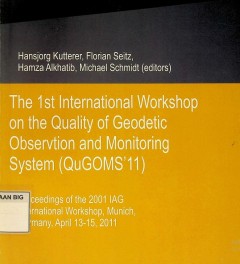
The 1st International Workshop on the Quality of geodesy observation andmonit…
This paper focuseson the modelingof data quality in processes which are in general not knowndetail or which are too complex to describe all influences on data quality. Asemerged during research, artificial neural networks (ANN) are capable formodeling data qualitparameters within processes with respect to their interconnections. Since multi-layer feed forward ANN are required forthis task a la…
- Edisi
- -
- ISBN/ISSN
- 978-3-319-10828-5
- Deskripsi Fisik
- viii, 178 hlm. : illus. ; 29 cm.
- Judul Seri
- -
- No. Panggil
- 526.1 HAN t
Pengelolaan Basisdata Spasial Kabupaten Aceh Barat
- Edisi
- -
- ISBN/ISSN
- -
- Deskripsi Fisik
- -
- Judul Seri
- -
- No. Panggil
- 005.74 BAD p
- Edisi
- -
- ISBN/ISSN
- -
- Deskripsi Fisik
- -
- Judul Seri
- -
- No. Panggil
- 005.74 BAD p

Vertical reference systems
- Edisi
- -
- ISBN/ISSN
- -
- Deskripsi Fisik
- x, 351 hlm. : illus.
- Judul Seri
- -
- No. Panggil
- 526.1 HER v
- Edisi
- -
- ISBN/ISSN
- -
- Deskripsi Fisik
- x, 351 hlm. : illus.
- Judul Seri
- -
- No. Panggil
- 526.1 HER v

30 Jurus Mengubah Nasib : Apa yang Bisa Kita Ubah Agar Allah Mengubah Nasib Kita
- Edisi
- -
- ISBN/ISSN
- 978-602-7986-14-5
- Deskripsi Fisik
- xii, 180 hlm. illus.; 17 cm.
- Judul Seri
- -
- No. Panggil
- 155.25 FAH j
- Edisi
- -
- ISBN/ISSN
- 978-602-7986-14-5
- Deskripsi Fisik
- xii, 180 hlm. illus.; 17 cm.
- Judul Seri
- -
- No. Panggil
- 155.25 FAH j
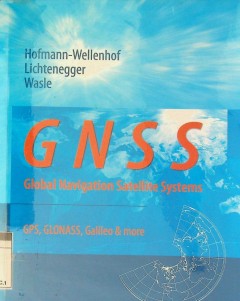
GNSS Global Navigation Satellite Systems, GPS, Glonass, Galileo and more
- Edisi
- -
- ISBN/ISSN
- 978-3-211-73012-6
- Deskripsi Fisik
- xxix, 516 hlm. :illus.
- Judul Seri
- -
- No. Panggil
- 526.1 HOF g
- Edisi
- -
- ISBN/ISSN
- 978-3-211-73012-6
- Deskripsi Fisik
- xxix, 516 hlm. :illus.
- Judul Seri
- -
- No. Panggil
- 526.1 HOF g
IUGG chronicle 1989 year book
- Edisi
- -
- ISBN/ISSN
- 0047-1259
- Deskripsi Fisik
- 330 hlm.
- Judul Seri
- -
- No. Panggil
- 526.1 IUG I
- Edisi
- -
- ISBN/ISSN
- 0047-1259
- Deskripsi Fisik
- 330 hlm.
- Judul Seri
- -
- No. Panggil
- 526.1 IUG I

The Secret of Public Speaking : Panduan Pintar Berpidato, Presenter dan Moder…
Buku ini berisikan cara-cara Bagaimana membangun komunikasi yang baik, bagaimana memahami gaya berpikir audensi, bagaimana menciptakan kesan pertama dan terakhir supaya berkesan, bagaimana teknik membuat isi presentasi, 6 cara merangkul audensi, tips dalam mengasah bahasa dan teknik vokal, 5 langkah mengoptimalkan gestur dan body language, bagaimana cara untuk melatih konsentrasi, bagaimana men…
- Edisi
- -
- ISBN/ISSN
- 978-602-288-282-4
- Deskripsi Fisik
- 260 hlm. : illus. ; 23 cm.
- Judul Seri
- -
- No. Panggil
- 155.25 FIT t
 Batas Wilayah
  Ekologi
  Fotogrametri
  Geografi
  Geologi
  GIS
GIS  Ilmu Tanah
  Kartografi
  Manajemen Bencana
  Oceanografi
  Penginderaan Jauh
  Peta
Peta