Ditapis dengan

Psikologi Konservasi : Memahami
Buku ini memperkenalkan kepada kita para pembaca tentang bidang psikologi konservasi yang baru muncul. Buku ini juga mengeksploitasi hubungan antarastudi perilaku manusia dan tercapainya tujuan pelestariannya.
- Edisi
- -
- ISBN/ISSN
- 978-602-229-341-5
- Deskripsi Fisik
- xi, 508 hlm. : illus. ; 23cm.
- Judul Seri
- -
- No. Panggil
- 155.9 SUS p

Laporan akhir analisis kebijakan program survei dasar dan pemetaan sumberdaya…
Kegiatan analisis kebijakan pengelolaan sumberdaya alam ini dimaksudkan untuk menyusun dokumen perencanaan pembangunan jangka menegah bidang 2010-2014 bidang survei dan pemetaan sumberdaya alam dang lingkungan hidup Bakosurtanal.rnAdapun tujuannya adalah diharapkan dapat memberikan arah dan sekaligus sebagai acuan dalam mewujudkan visi dan misi dan program survei dan pemetaan dasar sumberdaya a…
- Edisi
- -
- ISBN/ISSN
- -
- Deskripsi Fisik
- ii, 144 hlm.
- Judul Seri
- -
- No. Panggil
- Buku.Karya 2010/19 BAD l
Pengembangan algoritma koreksi efek astronomi pada citra-citra satelit
Citra satellite observasi bumi telah menjadi tulang punggung basis data lingkungan, dan sangat vital ketika terjadi bencana alam. Namun setiap citra satelit dihinggapi kesalahan sistematis karena efek-efek astronmi tertentu. Pada wilayah pesisir, efek astrononi tersebut adalah sistem bumi-bulan-matahari yang berakibat pasang surut. Tanpa koreksi, akan terjadi kesalahan secara sistematis dalam p…
- Edisi
- -
- ISBN/ISSN
- 978-602-9439-11-3
- Deskripsi Fisik
- 31 hlm. : illus.
- Judul Seri
- -
- No. Panggil
- Buku.Karya 2011/01 BAD p

Boundary control and legal principles
- Edisi
- -
- ISBN/ISSN
- -
- Deskripsi Fisik
- 409 hlm. illus.
- Judul Seri
- -
- No. Panggil
- 346.730432 CUR b
- Edisi
- -
- ISBN/ISSN
- -
- Deskripsi Fisik
- 409 hlm. illus.
- Judul Seri
- -
- No. Panggil
- 346.730432 CUR b
Laporan Akhir: Pengembangan valuasi ekonomi spasial dengan metode benefit tra…
Tujuan dari kegiatan ini adalahuntuk mengembangkan model valuasi ekonomi sumberdaya alam spasial berbasis penyebaran kondisi sumberdaaya alam dan kondisi sosial ekonomi. Dengan menggunakan pendekatan spasial (SIG) dapat dilakukan transfer nilai valuasi ekonomi dari lokasi rujukan ke lokasi yang diinginkan serta untuk mengetahui pengaruh perubahan spasial (kondiisi sumberdaya dan karakteristik …
- Edisi
- -
- ISBN/ISSN
- 978-602-9439-07-6
- Deskripsi Fisik
- viii, 46 hlm. : illus.
- Judul Seri
- -
- No. Panggil
- Buku.Karya 2011/02 BAD p
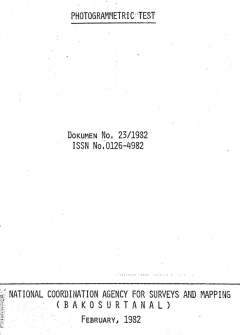
Photogrammetric test (dokumen No. 23/1982)
- Edisi
- -
- ISBN/ISSN
- -
- Deskripsi Fisik
- 3 hlm.
- Judul Seri
- -
- No. Panggil
- Dokumen 1982/23 BAD p
- Edisi
- -
- ISBN/ISSN
- -
- Deskripsi Fisik
- 3 hlm.
- Judul Seri
- -
- No. Panggil
- Dokumen 1982/23 BAD p

Hukum acara perdata tentang gugatan, persidangan, penyitaan, pembuktian, dan …
Buku ini berisikan penjelasan yang luas tentang tata cara (prosedur) beracara di pengadilan perdata yaitu sebelum, pada saat, dan sesudah persidangan yang dituangkan dalam 14 bab besar. Bab pertama membahas tentang surat kuasa mengenai pengertian, jenis dan bentuknya. Bab dua sampa Bab empat mengkaji tentang surat gugatan termasuk gugatan perwakilan kelompok. BAb lima tentang kekuasaan mengadil…
- Edisi
- -
- ISBN/ISSN
- 979-3421-72-X
- Deskripsi Fisik
- xliv, 911 hlm. ; 23 cm.
- Judul Seri
- -
- No. Panggil
- HK 347.598 YAH h
Peta lahan garam Indonesia
Ketersediaan lahan garam yang dikelola oleh industri garam rakyat merupakan data dan informasi yang strategis untuk dipetakan dan untuk mendukung program atau kebijakan swasembada garam nasional 2015, khususnya untuk menjadikan industri garam rakyat sebagai kekuatan penggerak ekonomi di sentra-sentra produksi garam di tanah air.rnNamun kesiapan masyarakat bukan saja bergantung pada kesediaan da…
- Edisi
- -
- ISBN/ISSN
- 978-979-1266-69-7
- Deskripsi Fisik
- xvi, 287 hlm. : illus.
- Judul Seri
- -
- No. Panggil
- Buku.Karya 2010/08 BAD p
Keputusan pressiden nomor 24 tahun 1995 tentang perubahan atas keppres nomor …
- Edisi
- -
- ISBN/ISSN
- -
- Deskripsi Fisik
- 296 hlm.
- Judul Seri
- -
- No. Panggil
- 348 IND k
- Edisi
- -
- ISBN/ISSN
- -
- Deskripsi Fisik
- 296 hlm.
- Judul Seri
- -
- No. Panggil
- 348 IND k

Yojana Geospasial : Memahami Informasi Geospasial secara multidimensi
Yojana Geospasial: Memahami Informasi Geospasial secara Multidimensi, membahas informasi geospasial sebagai bagian penting dalam berbagai aspek kehidupan, pembangunan, dan pengambilan keputusan. Disajikan dengan bahasa yang relatif ringan dan mudah dipahami, buku ini mengulas geoliterasi, sejarah perkembangan kelembagaan geospasial di Indonesia, produk dan kebijakan BIG, serta berbagai program …
- Edisi
- -
- ISBN/ISSN
- 9786026641793
- Deskripsi Fisik
- xxxi, 344 hlm., il. 21 cm.
- Judul Seri
- -
- No. Panggil
- 910.285
 Batas Wilayah
  Ekologi
  Fotogrametri
  Geografi
  Geologi
  GIS
GIS  Ilmu Tanah
  Kartografi
  Manajemen Bencana
  Oceanografi
  Penginderaan Jauh
  Peta
Peta